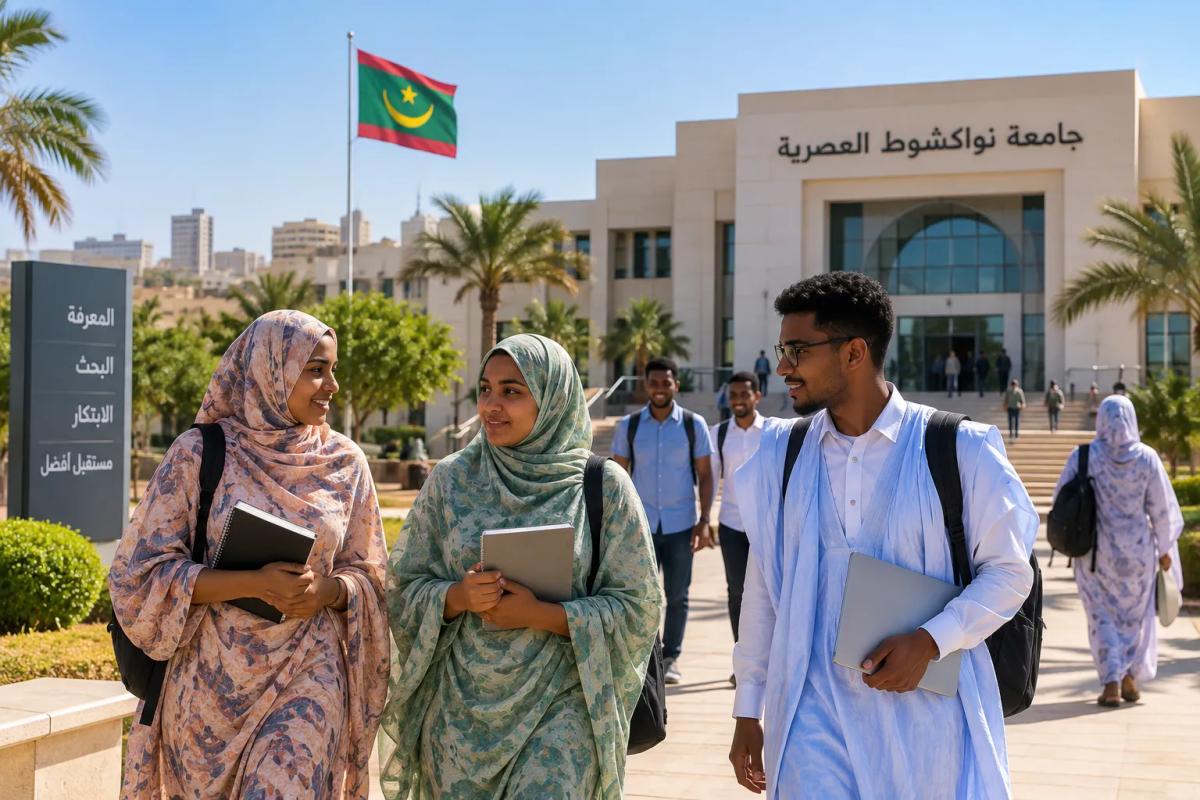
Top 5 Universities in Mauritania: A Guide to Higher Education and Academic Opportunities
- Salma R.
- Updated 8 October 2026
- 10 min read
Table of contents9
🌍 Top 5 Universities in Mauritania for 2026: Your Comprehensive Guide
Often known for its vast deserts, Mauritania has quietly developed a robust and evolving academic landscape. Over the past few decades, Mauritanian universities have made significant strides in advancing their educational system, successfully integrating traditional Islamic sciences with the demands of modern academia. From the historic halls of traditional institutes where students memorize the Quran and study Fiqh, to contemporary universities offering degrees in law, economics, technology, and international relations, Mauritania's higher education sector is remarkably diverse.
This guide highlights the top 5 universities in Mauritania for 2026, showcasing institutions that blend academic excellence with the nation's rich cultural heritage. Whether you are a Mauritanian student seeking your next academic destination or simply interested in understanding Mauritania's educational scene, this article provides valuable insights.
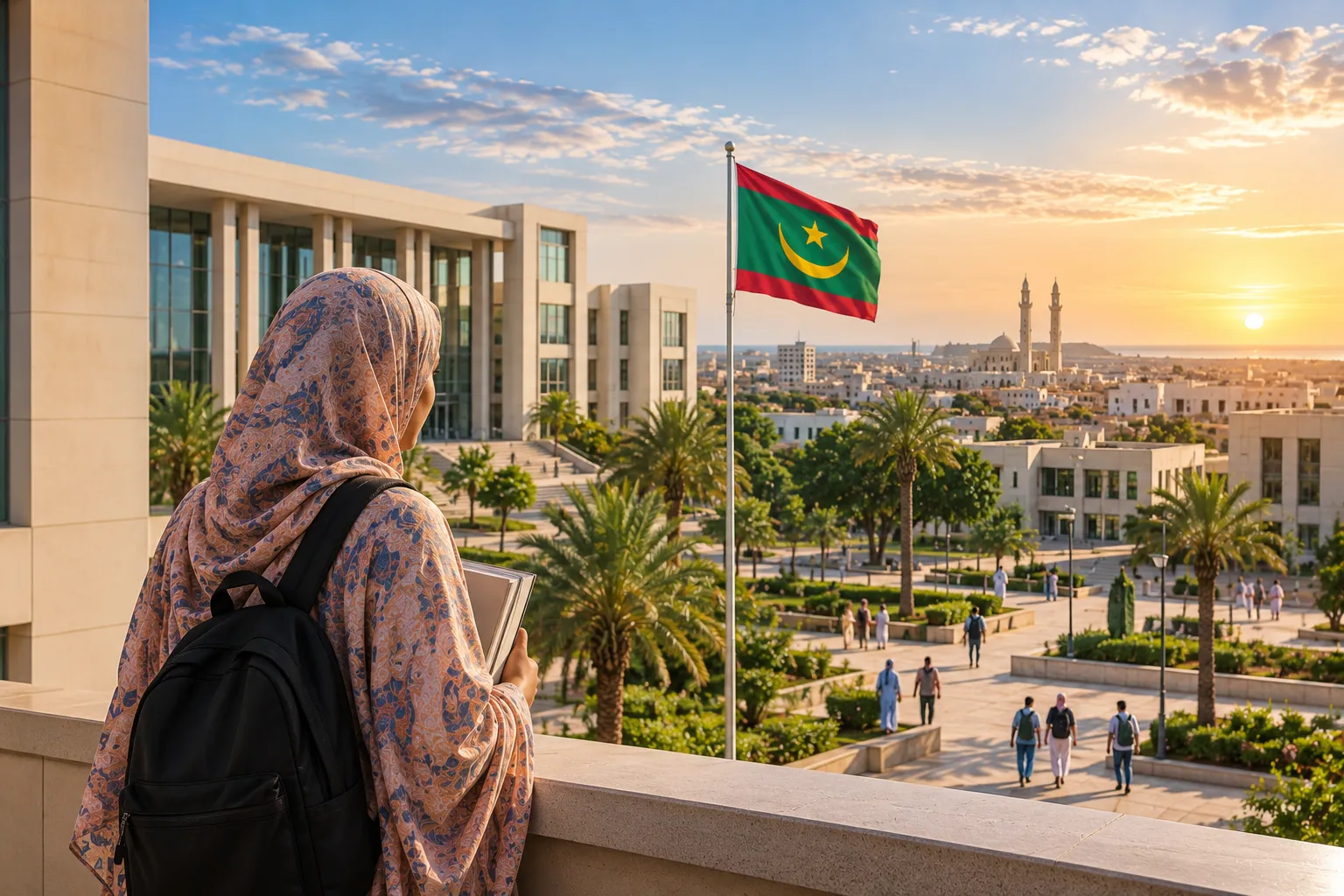
✅ Mauritania's Leading Higher Education Institutions for 2026
Here are the top 5 universities in Mauritania for 2026:
University of Nouakchott Al Aasriya (Modern Nouakchott University)
Islamic Sciences University of Ayoun
Lebanese International University in Mauritania
Higher Institute for Islamic Studies and Research
Shinqit University Al Aasriya (Modern Shinqit University)
🎓 1. University of Nouakchott Al Aasriya: A Hub of Education and Research
The University of Nouakchott Al Aasriya stands as Mauritania's largest and most significant institution for higher education and scientific research. Originally established in 1981 as "University of Nouakchott," it underwent modernization and merged in 2026 with the University of Science, Technology and Medicine to become its current iteration. Today, it serves thousands of students from across the country.
Key Academic and Professional Developments:
The university adopted the "License – Master – Doctorate" (LMD) system in 2026, aligning with international educational standards.
In 2026, it launched an Employment Center designed to help students and graduates integrate into the job market through training, career guidance, and by connecting education with the needs of both public and private sectors.
Research and International Partnerships:
The University of Nouakchott Al Aasriya plays a pivotal role in supporting scientific research in Mauritania. It houses 4 research laboratories and 31 research units covering vital fields such as energy, medicine, and social studies. In 2026, the university received a significant financial grant of 400,000 Euros from the French government, which aided in the development of new specialized laboratories. Furthermore, it participates in academic cooperation programs with international bodies like the Agence Universitaire de la Francophonie and actively seeks to enhance faculty and student exchange through effective regional and international partnerships.
Faculties and Institutes:
The university comprises several specialized faculties covering most scientific and humanities disciplines in demand in the job market, including:
Faculty of Arts and Humanities
Faculty of Law and Economic Sciences
Faculty of Sciences and Technologies
Faculty of Medicine
Faculty of Pharmacy
The Professional University Institute (focused on practical and vocational qualification)
It also features a Language Learning Center to help students improve their Arabic, French, and other foreign language skills. The university is actively developing new specializations, such as Pharmacy and Oil and Gas Engineering, in collaboration with the Ministry of Petroleum and Energy.
🕌 2. Islamic Sciences University of Ayoun: Upholding Islamic Values and Heritage
The Islamic Sciences University of Ayoun is a prominent Mauritanian institution specializing in Sharia and humanities. It was officially established by decree on April 28, 2026, becoming the third higher education institution in the country. Overseen by the Ministry of Islamic Affairs and Original Education, its primary goals include promoting Islamic values, developing traditional education, qualifying graduates from Mahadras (traditional schools) and religious centers, and contributing to scientific research in Sharia, Arabic language, and Islamic thought.
Geographic Reach and Partnerships:
While its main campus is in Ayoun, the university has established regional institutes across several Mauritanian states, including:
Imam Al-Hadrami Institute in Boutilimit
Abu Bakr Bin Amer Institute in Kiffa
Abdullah Bin Yassin Institute in Nouadhibou
Abd al-Qadir Kan Institute in Kaédi
The university prioritizes strong academic partnerships. It signed a memorandum of understanding with the University of Sharjah (UAE) to foster cooperation and exchange. An early 2026 strategic partnership agreement was also made with the University of Nouakchott Al Aasriya. On January 26, 2026, it concluded a cooperation agreement with the Islamic University of Madinah and maintains close academic ties with Mohammed V University in Rabat for joint Master's and PhD programs.
Research Initiatives:
Among its research initiatives is the establishment of a National Center for Extremism Studies, developed in cooperation with "Shanqitel" company, marking it as the first of its kind in Mauritania.
Checklist
Faculty of Usul al-Din (Principles of Religion)
Faculty of Sharia (Islamic Law)
Faculty of Arabic Language and Human Sciences
The aforementioned regional institutes
🌐 3. Lebanese International University in Mauritania: Modern Curricula for Global Education
Established in 2026, the Lebanese International University in Mauritania operates as an international branch of the Lebanese International University. Its mission is to deliver high-quality, globally-oriented education, preparing students for the job market through modern and professional academic curricula.
Faculties and Specializations:
The university offers a rich array of faculties, including:
Faculty of Arts and Sciences
Faculty of Business Administration and Law
Faculty of Education and Human Sciences
Faculty of Engineering
Faculty of Pharmacy
It also hosts a center for language instruction (Arabic, English, French, Spanish) and a center for continuing education and strategic studies. Most specializations are taught in Arabic and French, with a strong emphasis on English proficiency across all programs.
Academic System and Accreditation:
The university follows a three-stage academic system: Bachelor's (three years), Master's (two years), and Doctorate (three years). Its degrees are officially recognized by the Mauritanian Ministry of Higher Education and Scientific Research.
International Partnerships:
The university benefits from the extensive network of its parent institution, which has agreements with prestigious American universities (Ohio, Michigan, Montana), Kaunas University of Medicine in Lithuania, and Al Akhawayn University in Morocco. It is also a member of global federations such as the Association of Arab Universities and the Federation of the Universities of the Islamic World.
📜 4. Higher Institute for Islamic Studies and Research: A Beacon of Moderate Islamic Thought
Founded in 1979 in the heart of Nouakchott, the Higher Institute for Islamic Studies and Research was the first high-level Sharia institute in Mauritania. It has consistently served as a beacon of moderate Islamic thought, combining traditional and intellectual training based on the Maliki school of thought, similar to Al-Azhar in Egypt.
Development and Departments:
The institute began with core university departments including Usul al-Din, Fiqh and its principles, Islamic Economics, Imamate and Preaching, Arabic Language, Civilization, and Media. Over time, it expanded from one department to seven specializations and has plans to launch postgraduate programs.
Faculty and Graduates:
Its teaching staff comprises both traditional scholars (Shanaqita jurists with deep expertise in the Quran and Sunnah) and academics holding advanced degrees. The institute has produced generations of scholars, judges, and administrators who have held prominent positions both within Mauritania and internationally. It continues to uphold its status as a center for Sharia knowledge, initially focusing on Quranic memorization and sciences while preserving religious authenticity, and later enhancing scientific research and curriculum renewal.
Agreements:
In March 2026, the institute signed two significant agreements with Al-Azhar Al-Sharif University and Ayoun Islamic University, covering cooperation in education, scientific research, and combating extremism.
Duration of Study and Available Departments:
The study period at the institute is four years of specialization. The first two years offer general Arabic-Islamic education (general section), and from the third year, students specialize in one of the following six departments:
Department of Usul al-Din (Principles of Religion)
Department of Fiqh and its Principles (Islamic Jurisprudence)
Department of Arabic Language and Literature
Department of Civilization and Media
Department of Islamic Economics
Department of Imamate and Preaching
🌟 5. Shinqit University Al Aasriya: Authenticity and Modernity in Islamic Sciences
Shinqit University Al Aasriya was established in December 2026 as a non-profit private university, the first of its kind in Mauritania specializing in Islamic and social sciences. It is built upon a robust scientific methodology that combines theoretical learning with practical application, committed to upholding values of integrity and moderation, and disseminating authentic Islamic culture within society.
Programs and Scientific Research:
The university initially offered Master's programs in Islamic Studies, Sharia and Law, Islamic Economics, and Arabic Language and Literature. It later expanded to include Bachelor's programs in Arabic Language and Islamic Studies, broadening its student base and diversifying its qualifications. Since 2026, it has established the Shinqit Center for Studies, Research, and Training to support academic research and knowledge production in Islamic culture. The center publishes its work through annual journals and research publications and organizes two international seminars annually, bringing together local and foreign researchers.
Accreditation and Partnerships:
The university has obtained institutional accreditation for its Bachelor's and Master's programs from the National Council for Higher Education and Scientific Research. It is an active member of the Federation of the Universities of the Islamic World and holds partnerships with over 15 universities and educational institutions worldwide. It strengthened its academic ties through agreements with Cheikh Anta Diop University in Senegal (for teaching Arabic and Islamic civilization, and academic exchanges) and a cooperation memorandum with Ahmed Mokhtar Mbow University in Dakar in late 2026 to enhance research and knowledge exchange.
Faculties of the University:
❓ Frequently Asked Questions About Studying in Mauritania
Q1: Are Mauritanian university degrees internationally recognized?
A1: Yes, many Mauritanian universities, such as the Lebanese International University and Shinqit University Al Aasriya, are officially recognized by the Mauritanian Ministry of Higher Education and Scientific Research. They also maintain partnerships with regional and international academic institutions, which enhances the recognition of their degrees.
Q2: What are the main specializations available in Mauritanian universities?
A2: Mauritanian universities offer a wide range of specializations including humanities, law, economics, sciences and technologies, medicine, pharmacy, and engineering. Some universities also specialize in Islamic and Sharia sciences and Arabic language.
Q3: Do Mauritanian universities support scientific research?
A3: Absolutely. Universities like the University of Nouakchott Al Aasriya, the Islamic Sciences University of Ayoun, and Shinqit University Al Aasriya place great emphasis on scientific research. They house laboratories, research units, and specialized study centers, and collaborate with international organizations in this field.
🚀 Your Next Step Towards Studying in Mauritania with ElWijha
Mauritania offers a rich and diverse academic landscape, blending authenticity with modernity. Whether you are interested in Islamic sciences, contemporary disciplines, or scientific research, Mauritanian universities provide promising opportunities. Discover more through the ElWijha platform, which equips you with comprehensive tools and resources to help you plan your studies abroad. Explore scholarships, admission requirements, and student life opportunities to confidently embark on your academic journey.
Next step
Turn this guide into your application
Prepare your CV, letters and documents with the El Wijha tools.