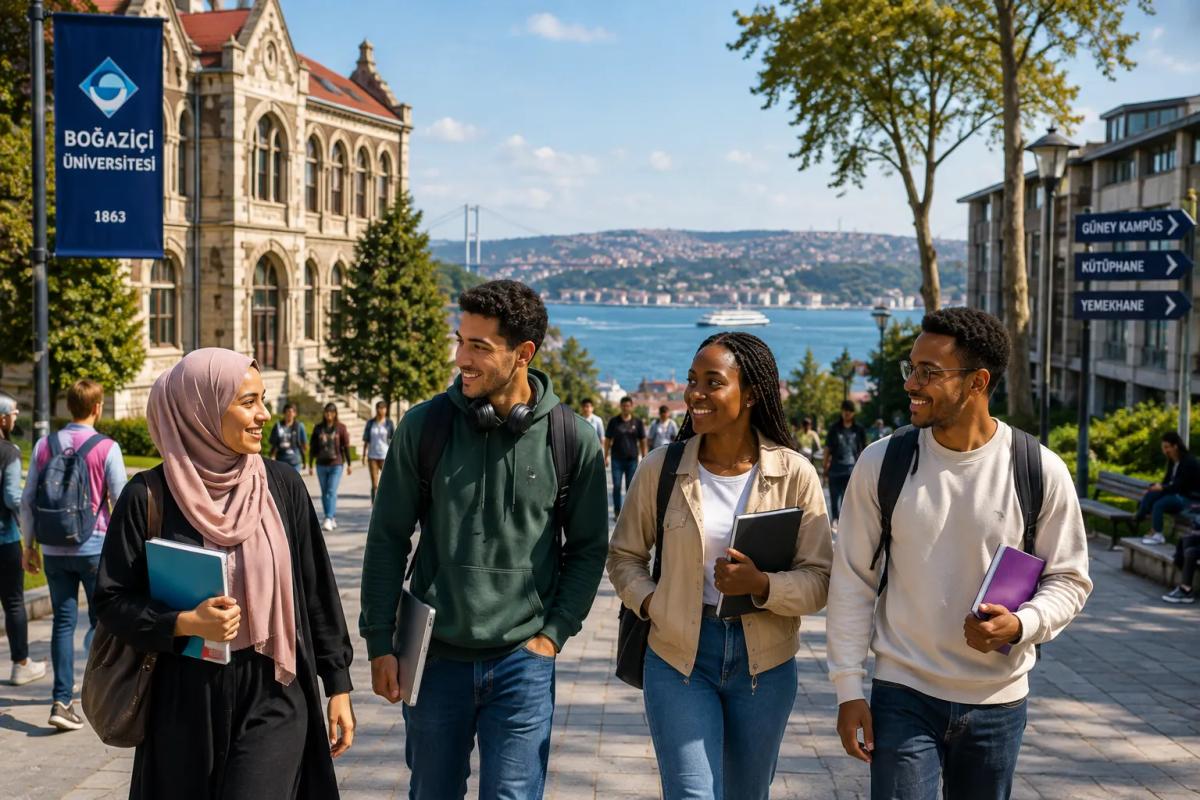
Studying in Turkey: A Complete Guide to Universities, Costs, and Student Life
- Salma R.
- Updated 7 October 2026
- 6 min read
Table of contents7
Are you envisioning a distinguished academic future? Do you consider studying abroad in a country that combines quality education, a comfortable lifestyle, and reasonable tuition fees? If so, Turkey is undoubtedly your ideal destination. This comprehensive guide addresses all your questions regarding the best Turkish universities, specialization selection, tuition and living costs, admission requirements, and reliable student support.
Turkey has emerged as a captivating study destination over recent years, thanks to several compelling factors:

🌍 Why Choose Turkey for Your Studies?
Stunning Geography: Many Turkish cities boast enchanting natural beauty, offering a unique tourist experience alongside your academic journey.
Cultural Proximity: Turkish culture shares significant similarities with Arab culture, facilitating easier integration into the new society. Moreover, Turkey attracts thousands of visitors globally, providing ample opportunities to interact with diverse cultures.
Academic Excellence: The Turkish government has continuously invested in enhancing the academic quality of its universities. This includes modern infrastructure, attracting highly qualified faculty, and continually developing curricula.
Opportunities and Scholarships: Turkish educational institutions offer numerous exceptional study opportunities, including scholarships and reasonable tuition fees, alongside streamlined admission procedures to attract outstanding international students.
💡 Student Life: A Blend of Modernity and Tradition
Unlike some more open societies, Turkey offers a unique balance between modernity and respect for religious values and cultural traditions. Despite its contemporary facade, the country maintains its Islamic roots and Eastern culture, which is very similar to many Arab societies. This cultural familiarity provides a great sense of comfort, reassurance, and ease of adaptation for international students.
🎓 Top Universities and Key Specializations in Turkey
Turkey is home to over 200 prestigious public and private universities, primarily located in major cities like Istanbul, Ankara, and Izmir, though some are also found in coastal and remote areas. Turkish universities are known for their wide array of specializations and language options, with most programs available in Turkish or English. Here’s a look at some prominent universities and their key specializations:
University | Funding Type | Key Specializations |
|---|---|---|
Bahçeşehir University | Private | Medicine, Business Administration, Engineering, Psychology |
Istanbul Aydın University | Private | Biomedical Engineering, Digital Media, International Trade, Civil Aviation |
Yeditepe University | Private | Dentistry, Pharmacy, Interior Architecture, Fine Arts |
Biruni University | Private | Human Medicine, Dentistry, Pharmacy, Nursing |
Istinye University | Private | Human Medicine, Pharmacy, Dentistry, Physical Therapy |
Istanbul University | Public | Human Medicine, Dentistry, Pharmacy, Law, Islamic Sciences |
Ankara University | Public | Human Medicine, Media, Political Science, Languages and Translation, Law |
✅ Admission Requirements for Turkish Universities
Gaining admission to Turkish universities is generally flexible and transparent compared to many other countries. While specific requirements may vary between institutions, especially public ones, the basic prerequisites typically include:
Valid Passport
High School Diploma
Academic Transcripts
Personal Photograph
Some universities, particularly public ones, may impose additional requirements such as passing the YÖS exam (for international students), language proficiency certificates, or other stringent international tests. In such cases, relying on trusted and professional student service centers can be crucial in facilitating the admission process.
💰 Tuition Fees and Living Costs in Turkey
The cost of studying in Turkey is notably reasonable, especially when considering the international accreditation standards and academic quality offered. This makes it an attractive option compared to universities in Europe and Asia.
Public Universities: Annual tuition fees typically range from $700 to $1000.
Private Universities: Annual tuition fees range from $1000 to $5000, depending on the university and chosen specialization.
Furthermore, numerous scholarships are available for international students, ranging from partial to full scholarships, often awarded based on academic merit and other clear criteria.
Student Living and Accommodation
Turkey offers a relatively affordable cost of living and student accommodation. The estimated monthly expenses for a student typically range from $250 to $500. This covers groceries, transportation, student housing, utilities (if applicable), clothing, and other personal needs.
Upon arriving in Turkey, you'll find various accommodation options:
Government student dormitories affiliated with public Turkish universities.
Private student housing units within dedicated buildings.
Sharing an apartment or studio with other students.
⚠️ Potential Challenges for International Students
While Turkey offers many advantages, students may encounter some challenges, particularly during their initial months. These are normal and understandable:
Language Barrier: Turkish is the primary language of communication. However, acquiring Turkish through daily interaction and formal preparatory year courses becomes manageable over time.
Cultural Differences: Despite cultural similarities with Arab countries, you might encounter cultural nuances, especially if residing in rural areas away from major cities.
Administrative Procedures: Navigating governmental administrative processes for documents and renewals can sometimes be complex. Fortunately, many reliable student service companies can assist in streamlining these procedures and securing immediate admissions.
📝 Ready to Start Your Academic Journey in Turkey?
Whether you're ready or still contemplating, reliable guidance is essential for this journey. Organizations like StudyFans, for instance, go beyond traditional student services, acting as a supportive family and trusted advisor throughout your studies in Turkey. They offer:
Simplified Procedures: Assistance with document preparation, translation, and online applications for university admission and student residency.
Immediate Admission: Opportunities to secure immediate admission to top private Turkish universities at competitive prices.
Logistical Services: Comprehensive support for accommodation and transportation from your arrival at the airport.
Free Consultations: Expert advice to help you choose the ideal specialization and university based on your aspirations, interests, and capabilities.
Frequently Asked Questions (FAQs)
Q: Are Turkish university degrees recognized internationally?
A: Yes, many Turkish universities hold international accreditations and their degrees are recognized globally, especially within Europe through the Bologna Process.
Q: Is it necessary to learn Turkish before studying?
A: While many programs are offered in English, learning basic Turkish is highly recommended for daily life, cultural integration, and enhancing your overall experience. Most universities offer Turkish language courses.
Q: Can international students work while studying in Turkey?
A: International students are generally allowed to work part-time in Turkey after completing their first year of study, provided they obtain a work permit. Regulations can vary, so it's advisable to check with the university and local authorities.
ElWijha is your trusted partner for navigating international education opportunities. Explore our platform for more guides, resources, and expert advice to make your study abroad dream a reality.
Tags
Next step
Turn this guide into your application
Prepare your CV, letters and documents with the El Wijha tools.