Norway in Your Plans: Study, Work and Everyday Life
- Meriem M.
- Updated 11 October 2026
- 5 min read
Table of contents11
What might your life look like if you chose Norway? Beyond studying and working, you will need to consider housing, expenses, healthcare and residence requirements for yourself and your family. ElWijha guides you through these aspects so you can balance your ambitions with your resources before taking the first step.
🛂 Entry and Residence
Whether you need a visitor visa depends on your nationality. Short stays are generally limited to 90 days in any 180-day period across the entire Schengen Area, while also respecting the duration authorised by your visa.
A visitor visa does not give you the right to work, including remotely during your visit. Long-term study, employment and family immigration follow separate residence procedures through the Norwegian Directorate of Immigration.
The rules for European Union and European Economic Area citizens differ from those for other nationalities. Identify the route that matches your nationality and purpose of stay before preparing your application.
🎓 Study and University Admission
Norwegian institutions offer programmes taught in English, while programmes taught in Norwegian require proof of language proficiency. Admission requirements vary by university, programme and previous qualification, and may include additional academic requirements.
Check the programme page for the teaching language, accepted qualifications and language tests, required documents and application deadlines.
Education is not free for all international students. Students from outside the European Union, the European Economic Area and Switzerland, including Algerian students, normally pay tuition fees that vary by institution and programme. Certain groups qualify for exemptions, generally including exchange students and doctoral candidates at public institutions.
📄 Residence Permits for Study
For those who need a study residence permit, the main requirements include admission to full-time study, accommodation and proof of sufficient funds for living expenses, as well as tuition fees where applicable.
University admission alone does not guarantee a residence permit. You must meet the Norwegian Directorate of Immigration’s requirements and provide the documents requested for your nationality and circumstances.
💰 Living Costs and Scholarships
A student’s living expenses for the 2026–2027 academic year are estimated at NOK 15,488 per month, or NOK 170,368 for 11 months. Additional costs include tuition fees where applicable, a semester fee of approximately NOK 1,000 paid to the student welfare organisation, and expenses such as travel, insurance and residence permit application fees.
Your actual budget will depend on the city, accommodation and lifestyle. These figures apply to a student and are not a standard estimate for an employed person or an entire family.
There is no individual government scholarship open to all international students. Specific funding opportunities exist, with different eligibility requirements and coverage. Check whether they cover tuition fees, living expenses or both.
💼 Employment and Workers’ Rights
The skilled worker route is one of the main options for people who need a residence permit to work. It generally requires relevant qualifications and a specific job offer from an employer in Norway for a position that requires those qualifications and is normally full-time. Pay and working conditions must also meet the applicable requirements.
A job offer alone is not enough to start working: you must obtain the appropriate permit or qualify for an authorised exemption.
Employees are entitled to a written contract setting out their employment terms and to respect for their rights concerning pay, working hours and overtime. Most employees also need a tax deduction card and a Norwegian identification number.
🏢 Self-Employment and Starting a Business
A residence route for self-employment may be available to some people with higher education or vocational qualifications. The business must normally be their own sole proprietorship and meet the requirements of the relevant permit.
Registering a business does not automatically grant residence or work rights. Check whether your activity qualifies and review the permit requirements before committing to business setup costs.
👨👩👧 Moving with Your Family
Family residence may be available to spouses, partners and children, depending on the relationship and the residence status of the person living in Norway. Requirements generally include proof of the family relationship and sufficient income, with exceptions depending on the circumstances.
The requirements for joining a worker, a student or a person granted protection differ. Check the conditions that apply to the resident’s status and the family members concerned.
🏠 Housing and Everyday Life
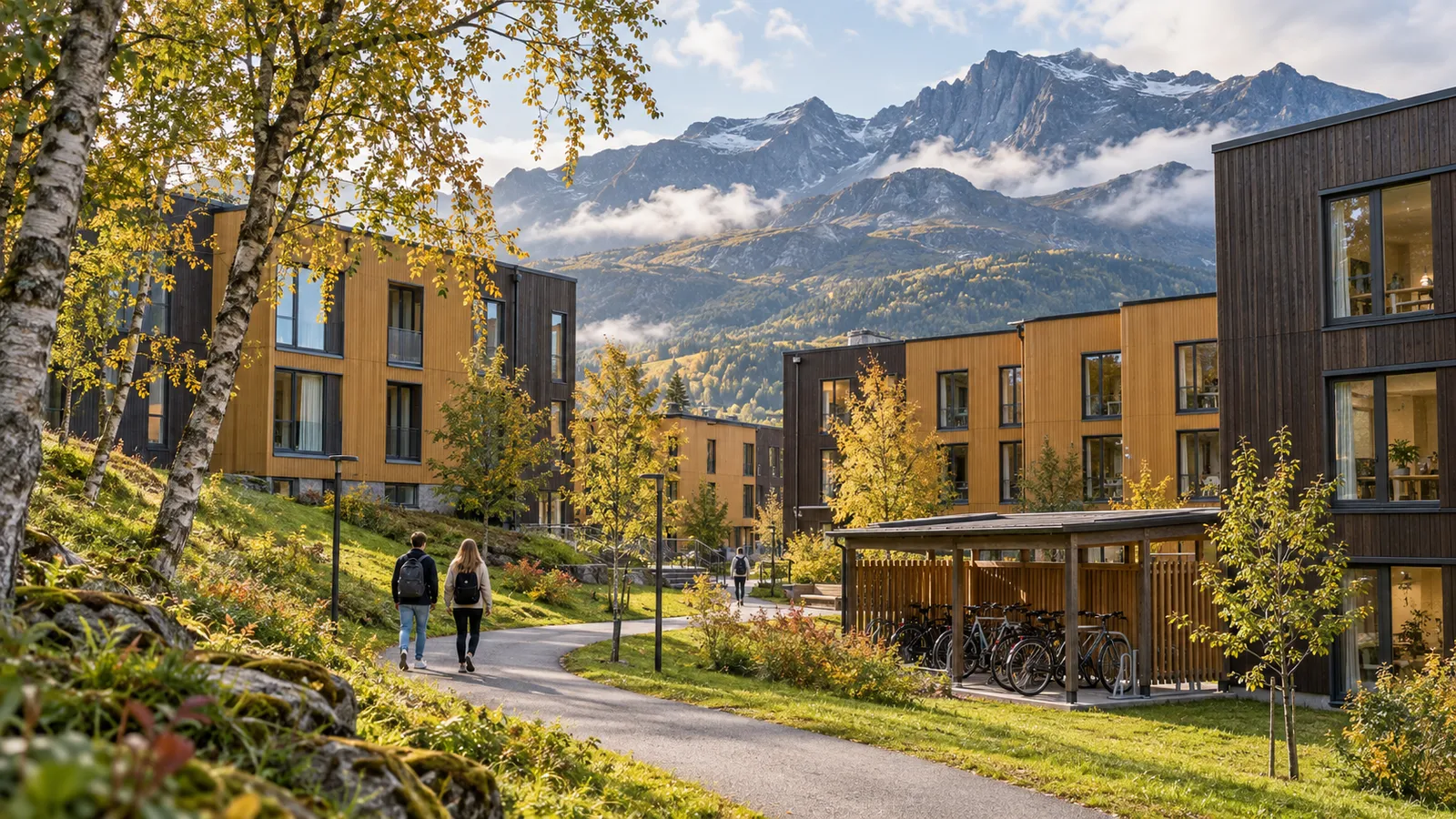
Student welfare organisations provide services including housing, food, activities and some healthcare services. Their accommodation is generally less expensive than the private rental market, but places are limited and demand can be high, especially in larger cities.
Start looking early and compare rent, additional expenses and transport costs. Read the tenancy agreement and deposit conditions before committing, so your budget accounts for the full cost of housing.
🏥 Healthcare and Insurance
Your healthcare rights depend on your status, residence and membership in the National Insurance Scheme. Coverage therefore differs between students, workers and visitors. Check whether you need private insurance.
Healthcare services are not entirely free. Some services require a patient contribution. Eligible people may receive an exemption card after reaching the annual ceiling for approved user fees.
🏡 Permanent Residence and Protection
Permanent residence generally requires three or five years of continuous residence, depending on the category, under permits that count towards this purpose. Other requirements concern income, language and knowledge of society, with certain exemptions.
Time spent holding a study permit does not count towards permanent residence. You must obtain a qualifying permit and meet the other requirements applicable to your circumstances.
Protection or asylum is a separate route for people who are persecuted or fear persecution or inhumane treatment in their home country.
❓ Frequently Asked Questions
Can I work while studying?
A residence permit for university studies generally allows you to work up to 20 hours per week during your studies, including remote work, and full-time during holidays. It does not allow self-employment or running your own business.
Can I stay after graduation to look for work?
People who have completed a degree in Norway and meet the requirements may apply for a job seeker residence permit lasting up to one year. This right is not automatic and is subject to the Norwegian Directorate of Immigration’s conditions.
Tags
Next step
Turn this guide into your application
Prepare your CV, letters and documents with the El Wijha tools.