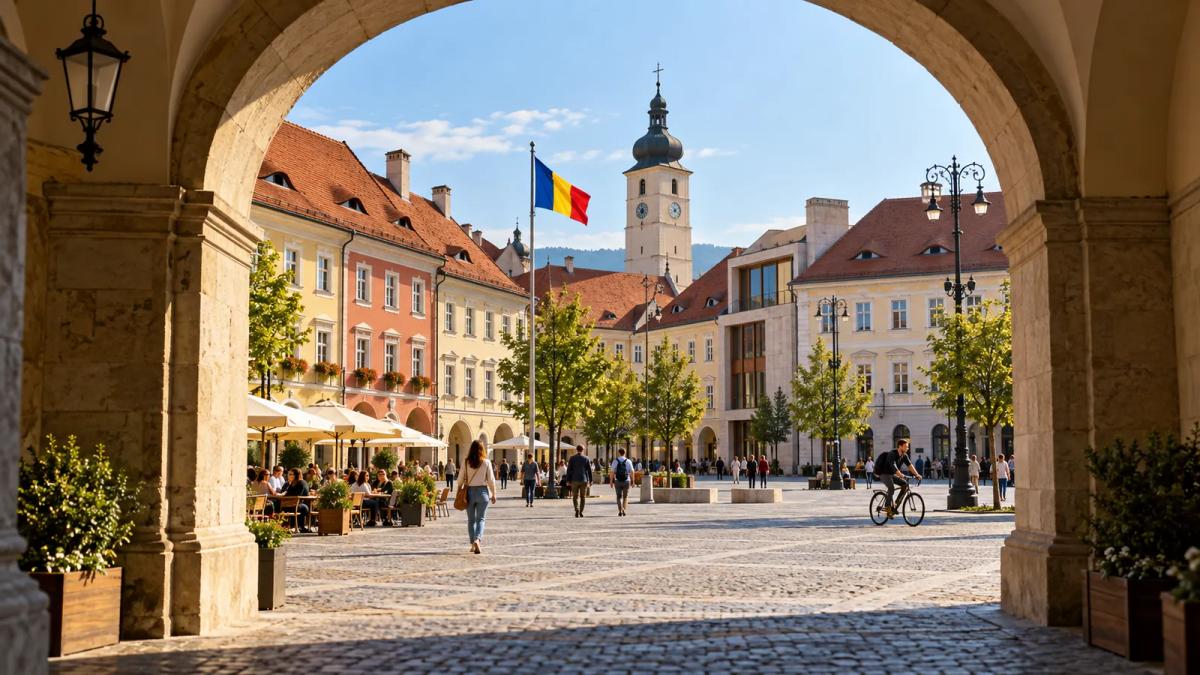
How Can You Build Your Future in Romania? Study, Work and Everyday Life
- Meriem M.
- Updated 11 October 2026
- 4 min read
Table of contents9
Choosing Romania as a new destination means understanding what awaits you before you travel: how do you secure university admission? What are the requirements for working and living in the country? How do you plan your budget and accommodation? ElWijha provides the main answers to help you prepare according to your circumstances.
🛂 What are the entry and residence requirements?
Visa requirements vary depending on your nationality and purpose of travel. Romania is part of the Schengen Area, so short stays are generally limited to 90 days in any 180-day period across the entire area, while respecting the duration authorised by your visa.
The long-stay D visa is generally issued for 90 days. If you meet the requirements, you must then apply to extend your right of residence through Romania’s General Inspectorate for Immigration (IGI) at least 30 days before it expires.
🎓 How do you begin your studies?
Choose your university, programme and language of instruction, then check the admission requirements, fees and deadlines. For non-EU students, the process includes obtaining the letter of acceptance issued by the Ministry of Education, along with translating and authenticating documents as required.
A study visa generally requires evidence of admission, tuition payment, financial resources and insurance, as well as a criminal record certificate. Some categories qualify for exemptions. After arrival, you must complete the residence application documents, including proof of enrolment, accommodation and financial resources.
Holders of a residence right for studies may work under a part-time employment contract for no more than six hours per day, without a separate work permit. After graduation, they may request a nine-month residence extension to look for work or complete the formalities for starting a business, subject to meeting the requirements.
🎯 What does the government scholarship cover?
The Ministry of Foreign Affairs offers scholarships to citizens of non-EU countries under specific eligibility criteria. Bachelor’s and master’s studies are taught in Romanian, with a preparatory year for those who need it. Doctoral studies may be undertaken in a foreign language specified by the doctoral school.
Medicine, dentistry and pharmacy are excluded from this scholarship. Funding includes tuition fees, a monthly allowance and accommodation support, subject to available places and funding. Application dates and conditions should be checked when each scholarship round is officially announced.
💼 What are the requirements for working?
The procedure depends on the job, nationality and residence status. Long-stay employment visas include two categories:
D/AM1: for highly qualified workers and certain categories defined by law.
D/AM2: for permanent, seasonal and cross-border workers, subject to the requirements for each category.
The single application is submitted through the government platform by the authorised entity, depending on the applicable procedure.
Check the salary, working hours, accommodation and deductions before accepting an offer. A contract alone is not enough to start working without completing the legal procedures.
🏢 Does starting a business grant residence rights?
Registering a company does not automatically grant residence rights. The commercial activities route has requirements concerning your role in the company, the business plan and the technical assessment from the competent authority, along with evidence of financial resources, accommodation and insurance. Renewal depends on continuing the activity in accordance with the requirements.
👨👩👧 Can you join your family?
An eligible resident may apply for family reunification for their spouse and unmarried minor children, as well as other relatives in certain cases.
The process generally includes approval from Romania’s General Inspectorate for Immigration, evidence of family relationships, accommodation, financial resources and health coverage, followed by a visa application. Eligibility depends on the resident’s permit type and duration. Special rules apply to the families of Romanian citizens.
🏠 What is the cost of living?
Budget for accommodation, utilities, food, transport and insurance, as well as tuition and administrative costs.
Estimates from the official study portal indicate university accommodation starting at around €80 per month, and approximately €400–650 for an entire apartment in major cities. These figures are indicative: check actual prices, included utilities and accommodation availability before travelling.
🏥 How do you obtain health coverage?
Coverage varies depending on your age, studies, employment and health insurance registration. Ask your university or insurer about the required documents and covered services; a residence permit alone does not mean your health insurance registration is complete.
For a life-threatening emergency, call 112.
📍 When can you apply for long-term residence?
It generally requires five years of qualifying continuous legal residence, along with additional conditions.
Study periods are counted at half their duration, and you cannot obtain this right while holding a residence permit for studies. Your residence category and periods of absence also affect how the duration is calculated.
Tags
Next step
Turn this guide into your application
Prepare your CV, letters and documents with the El Wijha tools.